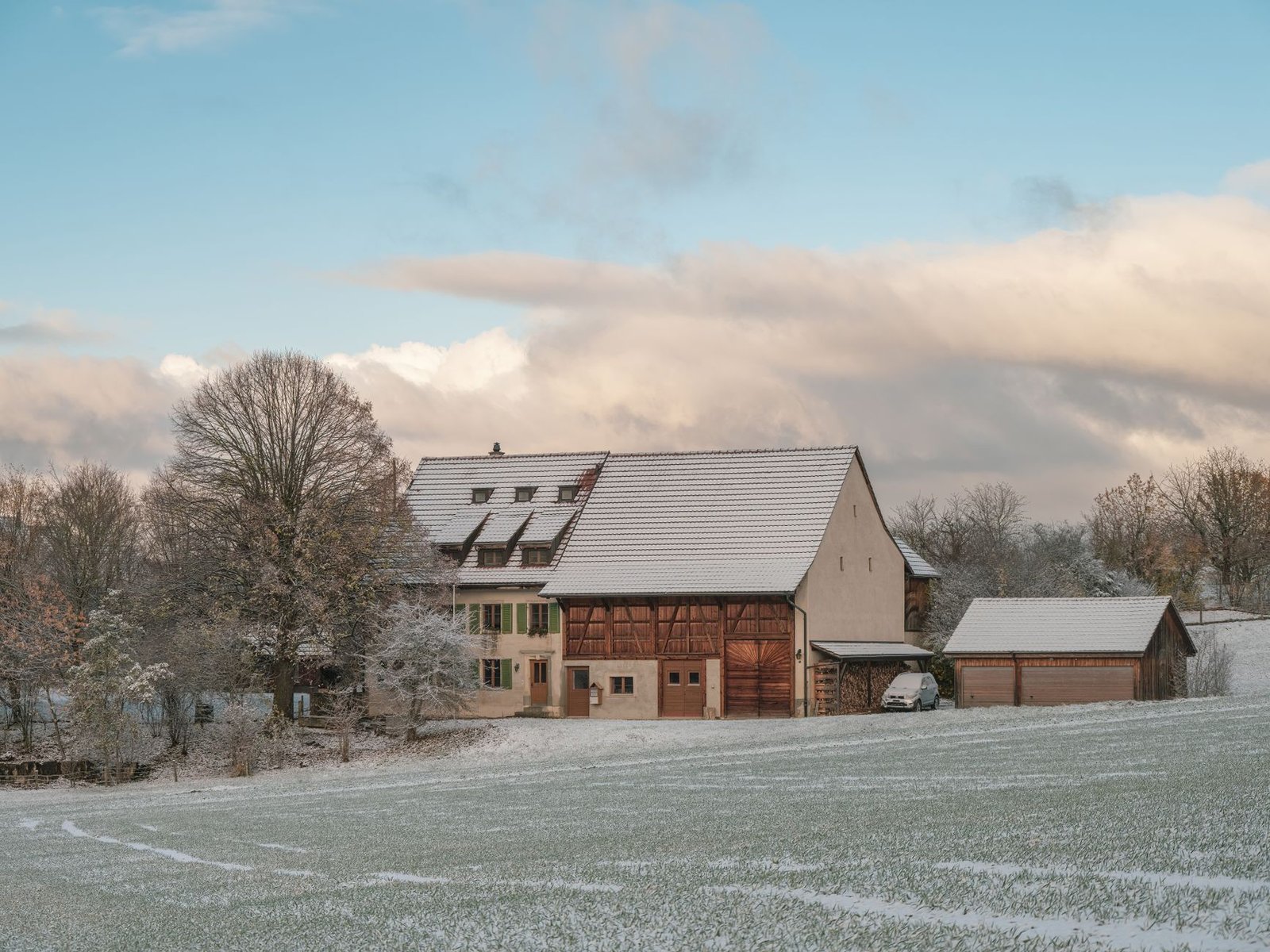
On the evening of April 4, 1922, neighbors walked onto a lonely Bavarian farmstead called Hinterkaifeck and found a scene that would haunt German criminology for a century. Six people — an entire family and their newly hired maid — lay dead, most of them killed with a heavy mattock and stacked in the barn under hay. The killer had not fled in panic. He had, by all appearances, stayed on the farm for days, feeding the livestock and eating in the kitchen while the bodies lay stiffening a few steps away. That single, chilling detail is why the Hinterkaifeck murders have never stopped disturbing people: this was not a robbery gone wrong. It was something patient, and it was never explained.
The farm, the family and the final night
Hinterkaifeck was an isolated smallholding roughly 70 kilometers north of Munich, near the village of Gröbern. It was home to farmer Andreas Gruber, 63, his wife Cäzilia, 72, their widowed daughter Viktoria Gabriel, 35, and Viktoria’s two children — seven-year-old Cäzilia and two-year-old Josef. On March 31, 1922, a new housemaid, Maria Baumgartner, arrived to take up her post. She would be dead within hours.
Investigators later reconstructed that the four adults and the older child were lured or driven, one by one, into the barn, where they were struck down with a mattock. The maid and the toddler were killed inside the house. The murders likely happened on the night of March 31, yet the bodies were not discovered until the following Tuesday, when concerned neighbors — who had not seen the family for days and noticed the children absent from school and church — finally investigated.
The warnings no one could explain
What makes this case feel like a ghost story with a body count is what happened in the weeks before the killings. Andreas Gruber told neighbors a series of unsettling things. He had found footprints in the snow leading from the edge of the forest to the farmhouse — but none leading back. He heard footsteps in the attic and found a strange newspaper on the property that no one in the household had bought.
Set of house keys went missing. A mechanism on a lock seemed to have been tampered with. Most eerily, the family’s previous maid had reportedly quit six months earlier, convinced the house was haunted by sounds she couldn’t account for. Gruber, a hard and reclusive man, mentioned these events but never went to the police. Whoever left those one-way footprints may already have been living in the attic, waiting — a theory that has never been proven, but has never been ruled out either.
A killer who stayed behind
The forensic details point to something almost more unnerving than the murders themselves. After the family was dead, someone remained at Hinterkaifeck. Smoke was seen rising from the chimney by neighbors over the weekend. The cattle had been fed and milked. Food in the kitchen had been eaten. The dog, found alive, had been cared for.
This was not a thief grabbing valuables and vanishing into the night. Cash and jewelry were reportedly left untouched, which gutted the simplest motive of all. Instead, the evidence suggests a person who felt so secure — or so compelled — that they lived among six corpses for days. That behavior has fueled endless speculation, from a deranged drifter to someone with a deeply personal fixation on the family. Like the never-cracked messages we examine in the unsolved Zodiac ciphers, the strangest clue here isn’t hidden — it’s the killer’s eerie confidence.
Suspects, rumors and dead ends
Over the decades, investigators chased a long list of possibilities. Dark local rumors of an incestuous relationship within the household — Viktoria’s younger child was rumored to have been fathered by her own father, Andreas — raised the idea of a jealousy-driven crime. Then there was Karl Gabriel, Viktoria’s first husband, officially reported killed in the trenches of World War I in 1914. His body, some claimed, was never conclusively identified. A persistent theory held that Gabriel had survived, returned home to find another man’s child in his house, and taken revenge. No evidence ever confirmed he was alive.
A neighboring farmer was suspected for years. Various drifters and criminals were questioned. In one of the era’s stranger investigative moves, police reportedly had the victims’ skulls sent to Munich, where clairvoyants were consulted — an approach that produced nothing usable and, worse, meant the heads were later lost, taking potential forensic evidence with them. More than a hundred people were interviewed over the years, and suspects were re-examined into the 1980s, without a charge ever sticking.
Why the Hinterkaifeck murders were never solved
The case is a catalogue of everything that can go wrong in an early-20th-century rural investigation. The bodies lay undiscovered for days, degrading the timeline. The crime scene was contaminated — curious locals reportedly walked through the property, and at one point the farmhands and neighbors even cooked and ate meals there during the search. Forensic science of 1922 could not exploit the physical traces the modern era relies on, and key evidence, including the skulls, vanished.
In 2007, students at the Police Academy in Fürstenfeldbruck re-opened the file using modern investigative methods as a training exercise. They reportedly identified a most-likely suspect but declined to name the person publicly, in part out of respect for living descendants. The farmhouse itself was demolished in 1923; a shrine now marks the spot. With no crime scene, no bodies to re-examine and no surviving witnesses, the honest answer to why this case endures is simple: the trail went cold almost a century ago, and it will almost certainly never warm again.
Watch the full Hinterkaifeck investigation
The timeline of Hinterkaifeck — the one-way footprints, the killer who fed the cattle, the skulls sent to fortune tellers — is even more disturbing when you follow it hour by hour. On the Dark CasesTV YouTube channel, we walk through the full story of this Bavarian farm massacre with the maps, the timeline and the theories laid out in detail, alongside our other deep dives into history’s coldest cases. If unsolved crimes like this one grip you, hit play and subscribe — some mysteries deserve to be seen, not just read.
Enjoyed this? More videos on the Dark CasesTV YouTube channel.